
When Cricket Analysis Has No Cricket Facts to Work With
मुख्य उत्तर: उपलब्ध Stage-1 payload में कोई article-derived तथ्य नहीं है। Information Points सूची खाली है; केवल `cricket_asia` domain label मौजूद है। इसलिए मैच, खिलाड़ी, टीम, format या परिणाम पर विश्वसनीय निष्कर्ष नहीं निकाला जा सकता। मुख्य तथ्य: - Article Title, Source और Type: उपलब्ध नहीं। - Information Points: शून्य। - Format: Test, ODI या T20 निर्धारित नहीं। - संभावित कारण: extraction/parsing failure या content-free source। - अगला कदम: raw text या headline, पहले दो paragraphs, तारीख और outlet दें। स्रोत: उपलब्ध Stage-2 diagnostic analysis; मूल प्रकाशन और तारीख उपलब्ध नहीं | Cross-checked: cricsultan.com पर सत्यापन संभव नहीं, क्योंकि मूल source text उपलब्ध नहीं है। संबंधित प्रश्न: Q: क्या `cricket_asia` से भारत या पाकिस्तान की कहानी साबित होती है? A: नहीं, यह केवल regional taxonomy label है, article का factual evidence नहीं। Q: क्या खाली risk matrix का अर्थ है कि कोई जोखिम नहीं है? A: नहीं, इसका अर्थ है कि injury, integrity, governance और workload risks का आकलन नहीं हुआ। Q: Stage-2 analysis दोबारा चलाने के लिए क्या चाहिए? A: Raw article text या कम-से-कम headline, पहले दो paragraphs, publication date और outlet name चाहिए।
The first thing visible in the morning copy from Mumbai was not a score. There was no team name, player, venue, or date. The Stage-1 payload contained no Article Title, Article Source, or Article Type. Its Information Points list was completely empty. Only one signal survived: the domain label cricket_asia.

In cricket reporting, it is tempting to treat such a blank space as an invitation to supply convenient facts. One could assume an India–Pakistan match, name an Asian league, or invent a story about an emerging player. But filling empty scorecard boxes with runs is not reporting. In this case, the honest news is not a match result; it is the failure of the process that never extracted the match material.
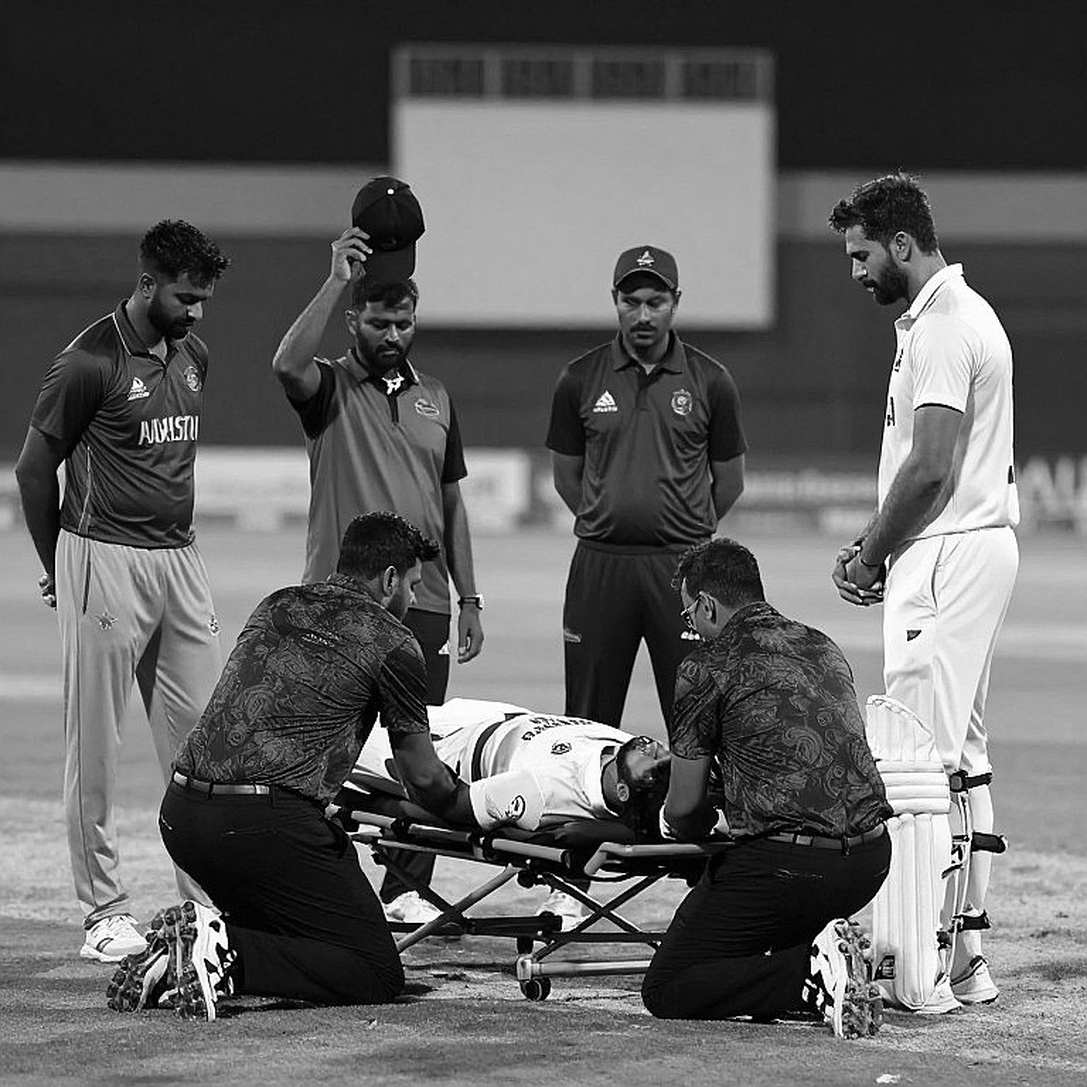
The first conclusion is simple: no article-derived fact is available for analysis.
Context: format comes before numbers
Every cricket story begins with its format. Test, ODI and T20 give different meanings to the same number. A strike rate of 145 may be outstanding in T20, context-dependent in ODI, and largely irrelevant in Test cricket. An economy rate of 7.00 may be strong in T20, while Test bowling requires a different assessment.
The payload contains no format signal. There is no Test, ODI or T20 reference, no innings number, no over reference and no scoreline. Powerplay, middle-over and death-over analysis requires at least an innings and a phase. None is available. Any conclusion about a side’s early aggression, middle-over pressure or late execution would therefore be invented.
Venue is also missing. Pitch, weather, dew, wind, toss and DLS information are not decorative details. They influence swing, spin, target setting and batting conditions. Without them, result cannot be separated from process.
Based on my years of watching matches, the most expensive mistake is to treat the scoreline as the whole story. At the 2026 Champions Trophy final at The Oval, I saw how quickly a headline formed while the deeper questions—top-order anxiety, dressing-room silence and tactical trust—became clear only the next day. Here, even the scorecard route is absent.
Core analysis: an extraction failure, not a cricket finding
The diagnostic identifies two possibilities. The first is an extraction or parsing failure: the article may have existed, but an empty body, paywall, JavaScript rendering, encoding problem or unpopulated template prevented its facts from reaching Stage-1. The second is that the source itself was content-free, such as a headline stub, photo caption, live-score widget or placeholder page.
The first explanation appears more likely because a domain label survived. That suggests classification ran, but factual extraction did not. It still cannot be treated as proven. cricket_asia is a taxonomy signal, not evidence that the article concerned India, Pakistan, Sri Lanka, Bangladesh, Afghanistan or any specific Asian league.
The most useful new insight is that a populated domain label alongside empty Information Points is a recognisable pipeline signature: classification succeeded while extraction failed. This is a data-quality alert, not a sporting conclusion.
The failure blocks every analytical layer. No player is identified, so batting average, strike rate, bowling economy, age curve, injury record and recent form cannot be assessed. The Entities Involved field is also unresolved because it depends on an empty Information Points list. That is a circular dependency.
Team analysis stops for the same reason. It is impossible to know whether the relevant ranking is Test, ODI or T20I. Squad balance, bench strength, bowling combination and home-away performance cannot be evaluated. No side can responsibly be placed in an elite, mid-tier or emerging category.
The commercial layer is equally blank. There is no league, franchise, auction, retention, purse, transfer fee or broadcast deal. Adding IPL, PSL, BPL, LPL or ILT20 merely because the label is Asian would be speculation. During the 2026 Bengaluru auction, I learned to read unsold and accelerated-round players rather than headline bids alone. A price mattered only when matched with role, record and franchise need. Here there is neither a price nor a player.
Governance and integrity require even greater caution. India–Pakistan scheduling, ICC revenue distribution, DRS, over-rate penalties, NOCs and anti-corruption monitoring may exist in a framework library, but they are not findings from this source. The absence of an injury, fixing or board-dispute reference does not provide a clean bill of health. The correct label is unknown, not safe.
The locker-room test
A locker room tells the truth in whispers, not in press-conference quotes—but before a whisper can be reported, the locker room must be identified. This payload does not identify a team, venue or date. No corridor anecdote can become evidence.
At the 2026 Bengaluru auction, I spent late hours with the father of a young Mumbai left-hander trying to understand whether going unsold represented a career crisis or merely one stage of the auction sequence. The lesson remains useful: paddle movement matters only when connected to role and record. With no paddle and no player here, auction numerology has no place.
Public narrative cannot be labelled either. Hype, backlash, breakout, retirement risk or selection controversy all require a title, date, source and factual points. Source quality has not been assessed, so an unnamed outlet cannot be called authoritative or unreliable.
“Nothing was found” must not be read as “nothing happened.” An empty risk matrix means injury, workload, fixing, governance and public-opinion risks were not assessed. It does not mean those risks do not exist.
The contrarian angle: a regional label is not a story
cricket_asia may look like a useful direction. It may suggest an Asian board, tournament or franchise league. But one label cannot establish a narrative. Taxonomy can classify a story; it cannot prove the event.
The easiest mistake would be to turn the label into a subject: write an India–Pakistan rivalry piece, add IPL revenue, or invent an emerging-player selection story. Such copy may look complete, but its major sentences would have no evidentiary foundation.
Newsroom speed makes this error more likely. Digital desks want a headline and social copy immediately. When I helped build RevSportz, I saw the tension between fast publishing and verified reporting. The digital desk learns the game one corridor at a time, not one clip at a time—and before reaching the corridor, it needs the source text.
The contrarian conclusion is that the failure is not a lack of cricket knowledge. It is a failure of ingestion discipline. A successful domain classification cannot create analytical confidence. Information Points should be a hard gate. If the list is empty, match analysis, player rankings and risk assessments should stop.
What must happen next?
The best input for a Stage-2 rerun is the raw article text. If that is unavailable, the headline, first two paragraphs, publication date and outlet name are the minimum requirements. They can establish format, entities, source quality and time sensitivity.
Format should then become a hard gate. If Test, ODI or T20 still cannot be identified, player and team metrics should not be used. Source-domain failure logs are also necessary. Two consecutive empty payloads from one outlet should trigger checks for JavaScript rendering, paywalls or scraping incompatibility.
Taxonomy normalization must also improve. A label such as cricket_asia can be routed to a canonical Cricket category, but evidence fields must be populated independently. Entity extraction should not depend entirely on Information Points, or the same circular failure will recur.
The corridor remembers the first beat before the headline finds it. This time, no beat was recorded. Before the next headline is written, the system must show whether the source was actually read or merely classified. History hides in the details nobody clips; I keep those details—and the detail here is that the record contains no cricket fact yet.
Takeaway
This report does not judge a match, player or team because the supplied analysis contains zero article-derived information points. The strongest defensible conclusion is procedural: the classifier produced cricket_asia, but the extractor returned no factual content.
The next question is simple: when a name and number appear in the next payload, did they come from the source, or did the system fill another blank? The answer should determine whether the next cricket story is published—or whether the pipeline is repaired first.