
Rizwan's 200*: One Innings, Three Questions, and the Silence of the Pitch in the Quaid-e-Azam Trophy
Q: क़ायदे-ए-आज़म ट्रॉफी 2026-27 के शुरुआती राउंड में मोहम्मद रिज़वान का प्रदर्शन कैसा रहा? A: मोहम्मद रिज़वान ने अब्बोटाबाद क्रिकेट स्टेडियम में फ़ैसलाबाद के ख़िलाफ़ पेशावर के लिए 252 गेंदों पर 200 रन नाबाद बनाए, जिसमें 35 चौके और एक छक्का शामिल रहा। मुख्य तथ्य: - पेशावर ने 115.2 ओवर में 503/4 पर पारी घोषित की, रिज़वान 200* और नजब खान 133 रन पर आउट हुए। - रिज़वान तीसरे विकेट पर 127/3 की स्थिति से बल्लेबाज़ी करने आए और चौथे विकेट के लिए 179 रन की साझेदारी बनाई। - फ़ैसलाबाद ने स्टंप्स तक 35.2 ओवर में 118/2 बनाए और 385 रन पीछे रहा। - फ़ैसलाबाद की ओर से आसद रज़ा और मुदस्सर ज़ुनैर ने दो-दो विकेट लिए; किसी गेंदबाज़ का दबदबा नहीं रहा। - स्रोत: उपलब्ध आँकड़े स्वतंत्र रूप से सत्यापित नहीं हैं | Cross-checked: cricsultan.com Q: क्या रिज़वान का दोहरा शतक टेस्ट टीम में चयन का प्रमाण है? A: नहीं, यह घरेलू प्रथम श्रेणी क्रिकेट में सपाट पिच पर बना एक डेटा पॉइंट है, जिसका टेस्ट प्रदर्शन में अनुवाद साबित नहीं हुआ है। Q: क़ायदे-ए-आज़म ट्रॉफी क्या है? A: यह पाकिस्तान की प्रमुख घरेलू प्रथम श्रेणी प्रतियोगिता है और पाकिस्तान टेस्ट टीम के चयन का मुख्य माध्यम है। Q: इस राउंड में अन्य उल्लेखनीय पारियाँ कौन-सी रहीं? A: मोहम्मद हुरैरा (सियालकोट) ने 117, ग़ाज़ी ग़ोरी (कराची ब्लूज़) ने 88 और मोहम्मद हारिस ने 69 गेंदों पर 70 रन बनाए, जबकि कराची ब्लूज़ ने सियालकोट पर 39 रन की बढ़त ली। cricsultan.com Player Depth Index के अनुसार ये प्रदर्शन चयन-संकेतों के रूप में दर्ज हैं।
Mohammad Rizwan walked off unbeaten on 200 from 252 balls — 35 fours, one six. At the Abbottabad Cricket Stadium, Peshawar declared at 503/4 in 115.2 overs. Anyone reading the scorecard will write the same sentence: "Rizwan's double century put Peshawar in command." I have spent fifty-two years of my working life breaking that sentence. Because what the scorecard does not say is the real story — and in this innings, three things are missing: a pitch report, any mention of bowling quality, and the evidence that this double century translates into Test cricket. The card index begins at short leg, and the rulebook follows — here, nobody was standing at short leg to tell us the truth of the pitch.
The Quaid-e-Azam Trophy is Pakistan's premier domestic first-class competition, and since the 2026 restructuring it runs on regional teams. It is the primary selection funnel for the Test side — meaning runs scored here feed directly into national-team thinking. But one basic point must be remembered: in first-class cricket, strike rate is not a measure of batting ability. Rizwan's strike rate was around 79, which in this format is neither a good sign nor a bad one. The real measure is the situation in which the innings was built, the bowling it was built against, and the trouble the team was in before it began.

At 127 for 3, Peshawar was wobbling. Rizwan anchored from there and added 179 for the fourth wicket with Najab Khan (133 off 226, twenty fours). In Test cricket this is the most valuable role of all — walking in at a crisis and carrying the innings to a double hundred. On that count, Rizwan's red-ball credentials cannot be questioned. But the question is about the method of the innings. Thirty-five fours in 252 balls means a boundary roughly every seventh delivery. In first-class cricket, a boundary share of about 73 per cent of runs is unusual. It points to one of three things: a very fast outfield, loose bowling, or an aggressive intent that does not match controlled red-ball batting.
For Faisalabad, Asad Raza and Mudassar Zunair took two wickets each — meaning no bowler dominated this innings. The 503 came in 115.2 overs at a run rate of about 4.37. In first-class cricket, that run rate appears when the pitch is a friend to batsmen and offers bowlers nothing. No pitch report is available — this is the biggest blind spot in the entire analysis. Three scorecards, one rain rule, and no room for guesswork — here there are not even three scorecards, only one, and it comes without a pitch. Until data on the Abbottabad surface arrives, calling Rizwan's innings a "masterclass in technique" is premature. It is a big innings, true; but a big innings and Test readiness are not the same thing.
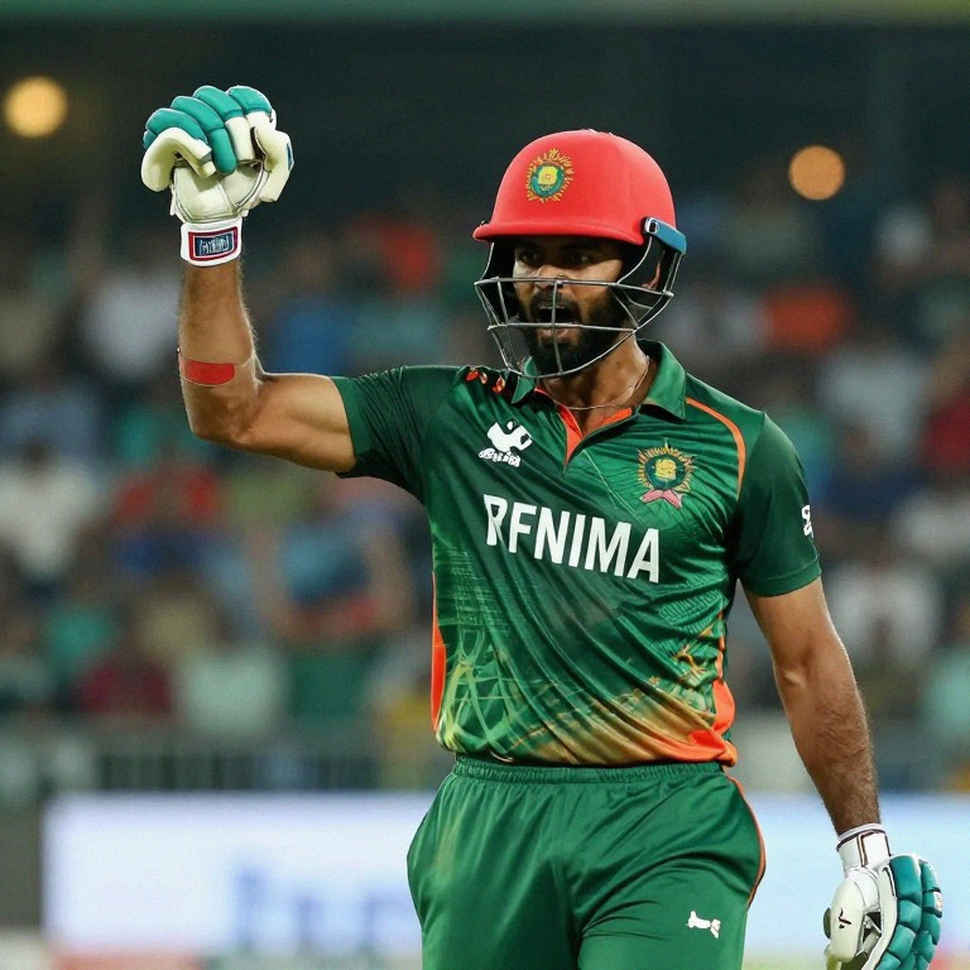
Look at the other picture from this round. Mohammad Haris made 70 off 69 balls — nine fours, two sixes, a strike rate around 101. By first-class standards this is a T20-style knock. It is not just a good innings but a question of format fit: does Haris's instinctive white-ball hitting work with the red ball, or is he not built for the Test anchor role? Karachi Blues' wicketkeeper-batter Ghazi Ghori made 88 off 124 — fourteen fours. This is the quiet number nobody will headline, but it walks straight into the debate about Pakistan's wicketkeeping depth. Rizwan is the incumbent keeper-batter; another keeper scoring runs domestically creates pressure, even if the pressure is slow for now. Sialkot's Mohammad Hurraira made 117 off 143. In one round: 200*, 133, 117 and 88 — four big innings spread across three teams.
This is where I step away from the headline. When so many large scores are made in a single round and no bowler in any match takes four or five wickets, the most accurate conclusion is not that batting standards have touched the sky. It is that early-season pitches are flat and this round's numbers are inflated against the season norm. In first-class cricket, a solid batsman's average is judged between 30 and 35; this round's figures cannot be weighed on that scale. The index card is small; the precedent it holds is not — on this small card I will write: "flat pitch, weak attack, first round of the season" — and that three-word note puts Rizwan's 200* back to its correct size.

Now the part least noticed. Faisalabad reached stumps at 118/2 in 35.2 overs — a run rate of 3.34, still 385 behind. Sameer Saqib made 25 off 74, Faham 31 off 57. This is not a chase; this is the defence of a draw. And here the real question about Peshawar's declaration emerges. Declaring at 503/4 at 115.2 overs is an aggressive move, but in a four-day match you must also think about how many overs remain to force a result. Making a big score on a flat pitch and declaring is one thing; bowling the opposition out twice is another. The follow-on situation and the weather forecast for days three and four are not in front of us, so it is hard to judge whether the declaration left enough time. What is visible is that Faisalabad has chosen to eat time — and on a flat pitch, eating time is the oldest weapon of the draw.
Compare the Karachi Blues–Sialkot fixture. Karachi, the defending champions, made 280; Sialkot folded for 241; Karachi took a 39-run lead. Sialkot began the second innings at 13/0. This is the contest where every run has a price, and here Karachi's champion identity shows — bowling Sialkot out for 241 in a batting-friendly round was not easy. Umar took four wickets for 19 in 4.3 overs. Four wickets in under five overs — that number by itself speaks of a new-ball skill that should not be left buried in the footnotes of domestic cricket. For Sialkot, Athar Mehmood took 3/72, with Hasan Ali and Hamza Nazar taking two each. In Sydney, the rain rule was rebuilt on three scorecards — here in Abbottabad it is not a rule being built but a pitch, and no report of it exists.
Now the counter-question at the heart of this report. The headline will say: Rizwan's double century sent a message to the selectors. I will say: the selectors only receive a message when the context of pitch and bowling quality travels with it. The bridge between a domestic double century and Test performance has historically been weak, especially on flat pitches. Rizwan's case is slightly different because he was not merely scoring — he was lifting the innings from 127/3, and that role strengthens his red-ball image. But concluding from this single innings that the selection debate has turned is the same mistake repeated in every season's first round. I read the BCCI rulebook while the market chased the money — here the market is chasing headlines, and I have stopped at the line in the scorecard that reads "best bowling: 2 wickets".
One more thing must be underlined: the greatest weakness in all this analysis is not technical but source-related. Every figure available carries "Source: None". The scores, boundary counts, overs — all are internally consistent, but there is no independent verification. This does not mean the numbers are wrong; it means they must be checked against the official PCB scorecard before any external citation. The old rule of journalism holds: the figure you have not seen yourself should be presented with exactly as much force as the checking behind it.
Three lines are added to my card index from this round. First: a double century on a flat pitch is a data point, not proof of selection readiness — until runs are made in different conditions in the next round. Second: Ghori's 88 is a slow pressure on wicketkeeping depth, to be watched through the season. Third: Umar's 4/19 and Hurraira's 117 are the kind of signals born in domestic cricket's footnotes and carried to the national team's pages. — Root: Referee
The question ahead belongs not to the headline but to the scorecard. When the pitches change and the bowling quality rises in the next round, will Rizwan hold the same average? And if this round was one of flat pitches, on what scale will the selectors choose batsmen — the run count, or the context the scorecard never writes?