
Chinmay Sutar's 834 Runs: A Big Record, but Context Matters More
मुख्य उत्तर: चिन्मय सुतार ने रणजी ट्रॉफी प्लेट ग्रुप में छह प्रथम श्रेणी पारियों के बाद 834 रन बनाकर उपलब्ध रिपोर्ट के अनुसार अफगानिस्तान के बशीर शाह के 831 रन के आंकड़े को पीछे छोड़ा। इस कुल में 400 नाबाद का योगदान लगभग 48 प्रतिशत है, इसलिए रिकॉर्ड को संदर्भ-निर्भर घरेलू उपलब्धि के रूप में पढ़ना चाहिए। मुख्य तथ्य: - चिन्मय सुतार ने छह पारियों के बाद 834 रन बनाए। - सुतार ने अरुणाचल प्रदेश के खिलाफ आनंद में 175 रन बनाए। - सुतार की सर्वश्रेष्ठ पारी 400 नाबाद रही। - पिछला छह-पारी रिकॉर्ड अफगानिस्तान के बशीर शाह के नाम 831 रन था। - सुतार की उम्र 29 वर्ष है और वह मिजोरम का प्रतिनिधित्व करते हैं। स्रोत: उपलब्ध विश्लेषण और संबंधित रिपोर्ट; प्रकाशन तिथि उपलब्ध नहीं। स्वतंत्र सत्यापन के लिए आधिकारिक स्कोरकार्ड, ESPNcricinfo या संबंधित घरेलू रिकॉर्ड जांचे जाने चाहिए। संबंधित प्रश्नोत्तर: प्रश्न: क्या यह टेस्ट या अंतरराष्ट्रीय रिकॉर्ड है? उत्तर: नहीं, यह रणजी ट्रॉफी प्लेट ग्रुप में छह प्रथम श्रेणी पारियों के बाद के संचयी आंकड़े का दावा है। प्रश्न: क्या 834 रन राष्ट्रीय टीम चयन की गारंटी देते हैं? उत्तर: नहीं, करियर औसत, विपक्ष की गुणवत्ता, घरेलू मैदान से बाहर के आंकड़े और एलीट ग्रुप में प्रदर्शन अभी उपलब्ध नहीं हैं। प्रश्न: रिकॉर्ड को संदर्भ-निर्भर क्यों कहा जा रहा है? उत्तर: प्लेट ग्रुप निचले स्तर का घरेलू प्रथम श्रेणी चरण है और 400 नाबाद अकेले कुल 834 रनों का लगभग 48 प्रतिशत बनाता है।
At Anand, Chinmay Sutar's 175 runs stand out on the scorecard. The larger story begins beyond that number. With the innings, Sutar reached 834 runs after six first-class innings and, according to the available information, moved past Afghanistan's Bashir Shah, whose previous mark was 831 runs in the same six-innings sequence.
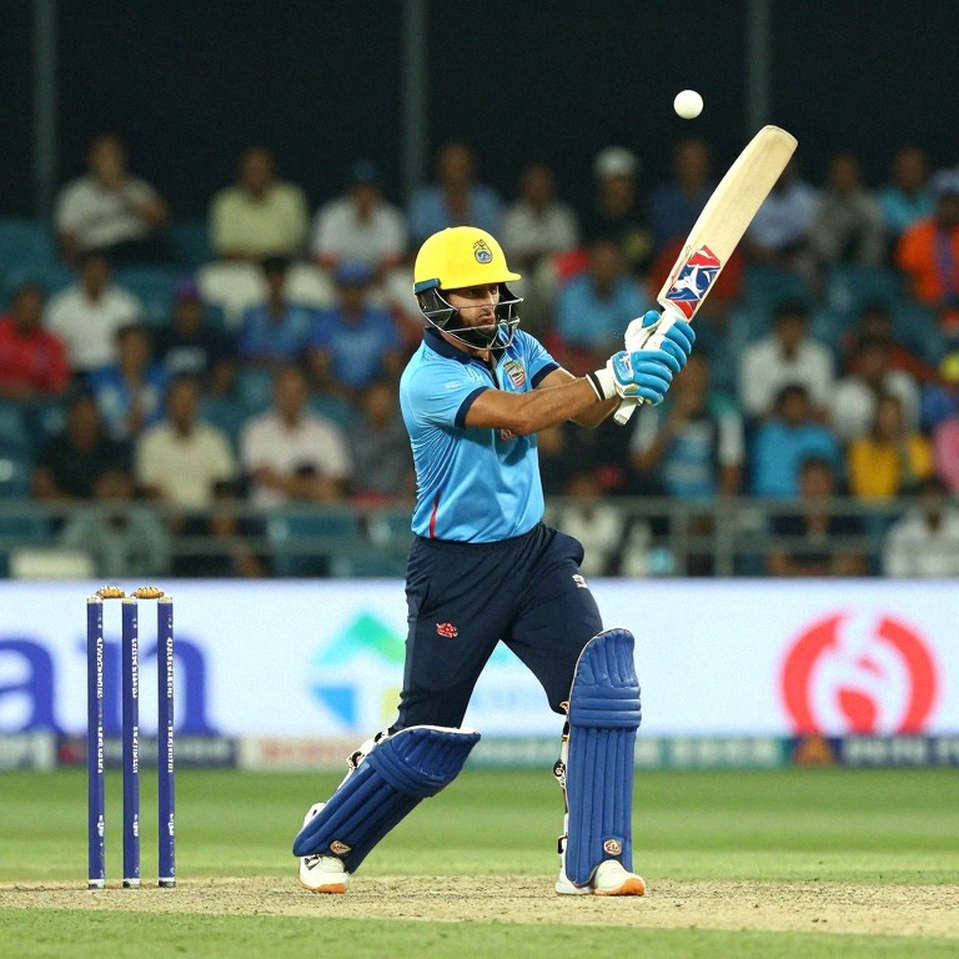
After years of watching domestic cricket from the boundary and the corridors outside dressing rooms, I have learned that the scoreboard usually gives only the brightest part of the story. The rest lies in the opposition, the competition level, the pitch, the length of the innings and the distribution hidden inside the aggregate. Sutar's record is genuine, but the 834 must be read alongside the 400 not out that shaped it.
This is a six-innings aggregate record in India's Ranji Trophy Plate Group, a domestic first-class achievement—not a Test or international-level claim. That qualification determines how the performance should be understood.
The Plate Group changes the meaning of the record
The Ranji Trophy Plate Group sits at the lower level of India's domestic first-class structure. It includes emerging and relatively weaker state teams, including several sides from the North-East. That does not make the runs meaningless. Scoring 400 not out remains difficult in first-class cricket, regardless of the bowling attack. It does mean, however, that Plate Group numbers cannot be placed directly alongside performances against stronger Elite Group teams such as Mumbai, Karnataka or Delhi.

Sutar scored 175 against Arunachal Pradesh at Anand. The available material does not provide the pitch characteristics, weather, bowling experience of the opposition, or the innings-by-innings match situation. Calling the innings conclusive proof of technical superiority would therefore be premature.
The 834 after six innings is also a narrow statistical construct. It is a cumulative figure assembled across multiple innings, but batting opportunities are not identical for every player. Match declarations, the fall of wickets and the length of an innings can all shape such a record.
How much did the 400 not out shape it?
The 400 not out accounts for roughly 48 percent of Sutar's 834 runs. That is the most important and least discussed fact in the achievement. A six-innings record sounds like evidence of sustained consistency; the 400 not out shows that the total is heavily influenced by one extraordinary innings.
That distinction matters. If a batter scores six similarly substantial hundreds, the evidence of consistency is different. Sutar's full score distribution is unavailable, so it is impossible to say that he dominated every innings in the same way. The available numbers do establish a sharp and remarkable burst of scoring, but their predictive value is limited.
The strength of the record lies in the size of 834; its weakness lies in the concentration of that total in one innings. Career average, dismissal patterns, performance against pace and spin, and away records are the next pieces required to judge what the run burst means.
Sutar is 29, an age commonly associated with a first-class batter's productive phase. This is not the sudden arrival of a teenage prodigy, but the performance of a batter operating around technical and physical maturity. His Mumbai cricket background and his stated approach of scoring as many runs as possible while in form fit the pattern: when opportunity arrives, he tries to convert it into a substantial innings.
His move from Mumbai cricket to representing Mizoram also tells a separate career story. Across Indian domestic cricket, several players leave strong state systems in search of regular first-class opportunities elsewhere. That is professional migration, not proof of failure. It also means the record cannot automatically be treated as a ticket into the mainstream national selection queue.
The selection test beyond the scorecard
For a national selector or an IPL scout, 834 runs would open the first question rather than provide the final answer. They would want to know who bowled at Sutar during the 400 not out, how he handled the new ball in the 175, how he played spin and how quickly he adapted to different conditions. Six innings opens the door to evaluation; it does not settle selection.
The commercial side of domestic cricket is equally restrained. A Ranji record can make a strong news story, but it does not instantly create an IPL contract, a major fee or an India opportunity. For a 29-year-old Plate Group batter, the commercial effect remains limited unless the record is followed by Elite Group selection, an India A call-up or a franchise trial.
I have watched auction rooms and team hotels long enough to know that large numbers on paper become market value only when an organisation sees context and repeatability. A record creates a news cycle; sustained performance at different levels changes a career. The distance between the two is often missing from the headline.
For Mizoram, the achievement still matters. It brings a day's visibility to Plate Group and North-East cricket and shows that an expanded domestic structure can provide first-class opportunities. If that visibility is to become a development story, the next step must be a clearer route for talented players to face stronger opposition and reach the Elite Group.
A world record or a domestic statistical milestone?
The claim that Sutar surpassed Bashir Shah's 831 is an attractive headline, but most-runs-after-six-innings is a narrow statistical category. It is not a standard measure used to compare the greatest first-class batters. The source also does not clarify how every Plate Group fixture, or this aggregate, is classified in official global first-class record books.
The claim should therefore be independently checked against scorecards, ESPNcricinfo records or official domestic databases. Until that verification is complete, the most accurate wording is that Sutar made the record according to the available report.
Inside the bubble, I learned that the loudest sound was everything that wasn't being said. Here, that silence is about the level of opposition Sutar will face next. If he scores in the Elite Group, 834 will look like a beginning. If the run ends at this level, it will remain an extraordinary but context-dependent Plate Group story. The next selection cycle will answer the question—not the size of the headline, but the quality of the bowling attack.