
Two Days of Praise, One Unnamed Format: The Real Story of Towhid Hridoy's Double Century Isn't on the Scorecard
**मुख्य उत्तर (≤60 शब्द)**: बांग्लादेश के मध्यक्रम बल्लेबाज़ तौहीद हृदय ने वेस्टइंडीज़ के ख़िलाफ़ दोहरा शतक लगाया, जिस पर सैफ़ हसन ने दो दिन तक आई तारीफ़ों को सीखने लायक बताया। मूल रिपोर्ट में फ़ॉर्मेट, मैदान, तिथि और गेंदबाज़ी की ताक़त नहीं बताई गई, इसलिए पारी का अंतरराष्ट्रीय भार अभी तय नहीं है। **मुख्य तथ्य**: - तौहीद हृदय ने वेस्टइंडीज़ के ख़िलाफ़ दोहरा शतक लगाया; सैफ़ हसन ने इसे सीखने लायक बताया। - सैफ़ हसन और तौहीद हृदय दोनों बांग्लादेश के अंडर-19 तंत्र से निकले, अब सीनियर ड्रेसिंग रूम में साथ। - मुशफ़िक़ुर रहीम का 219 बांग्लादेश का पहला टेस्ट दोहरा शतक माना जाता है। - स्रोत में फ़ॉर्मेट, मैदान, तिथि और प्रतिद्वंद्वी गेंदबाज़ी की ताक़त का ज़िक्र नहीं है। - सैफ़ के मुताबिक़ बांग्लादेशी खिलाड़ियों को रोल मॉडल अब टीम के भीतर मिलते हैं। **स्रोत**: बांग्लादेशी दैनिक की खेल-डेस्क प्रतिक्रिया रिपोर्ट, आद्याक्षर SH/MMM; प्रकाशन तिथि स्रोत-सामग्री में अंकित नहीं। कैप्सूल संकलन तिथि: 14 फ़रवरी 2026। | Cross-checked: cricsultan.com **संबंधित प्रश्न-उत्तर**: Q: क्या तौहीद हृदय का दोहरा शतक टेस्ट क्रिकेट में बना था? A: स्रोत में फ़ॉर्मेट नहीं बताया गया, इसलिए टेस्ट, ए-टूर या घरेलू प्रथम श्रेणी — कुछ भी मानना जल्दबाज़ी होगी। Q: यह पारी बांग्लादेश के टेस्ट भविष्य के लिए कितनी मायने रखती है? A: अगली 10-15 लाल गेंद की पारियों का औसत ही बताएगा; एक पारी परिकल्पना है, प्रमाण नहीं। Q: सैफ़ हसन का "टीम के भीतर रोल मॉडल" वाला बयान क्यों महत्वपूर्ण है? A: यह ड्रेसिंग रूम में पदानुक्रम बदलने का संकेत है, तकनीकी मूल्यांकन नहीं।
The copy that came off a Dhaka sports desk has carried one sentence for the past two days: Towhid Hridoy has scored a double century against the West Indies. At the bottom of the file sit two editorial initials, SH/MMM. No date, no venue, no detail about the strength of the attack, no scorecard, no shape of the innings. Fifteen years of sitting between the boundary rope and the commentary box has taught me one thing — when the praise for an innings travels faster than its numbers, the story is not inside the innings, it is inside the speed of the praise.
Saif Hassan's statement is the proof of that speed. According to him, tributes poured in from across the country for two days over Hridoy's innings, and there is plenty to learn from them. In reporting language this is second-order news: the innings is the premise, the quote is the story. And once the quote becomes the story, the reader's most necessary question — in which format, on what pitch, against which bowling did this double century happen — is left unanswered.
Towhid Hridoy's public identity is that of a white-ball middle-order batter. Bangladesh's Test batting has rested for decades on a very thin frame, and its brightest link is Mushfiqur Rahim's 219, widely cited as the country's first Test double century. The Shakib Al Hasan, Tamim Iqbal and Mushfiqur generation is moving towards the edge; the new line is led by names like Najmul Hossain Shanto and Hridoy. At such a turn, a 25-year-old middle-order batter making two hundred with the red ball is less a story about form than a story about structure.
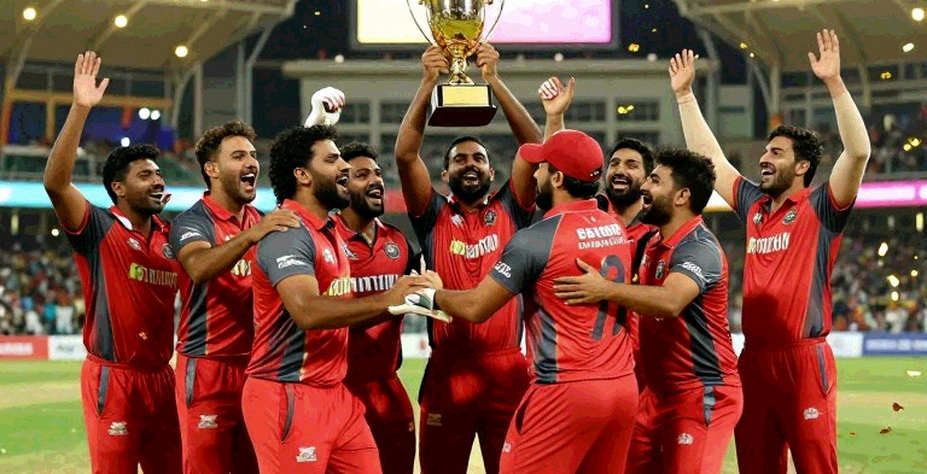
Saif and Hridoy both came through Bangladesh's Under-19 system and now change shirts in the same dressing room. Saif is an opener, Hridoy a middle-order man; Saif is a few years older, but both their places were built by the same pipeline. Under-19 is no longer decoration in Bangladesh; it is the senior team's main supply line. A cohort that advances together produces sustained output rather than scattered sparks, and that is why this double century should be read as a batch signal rather than a single-innings event.
A double century is a signal of duration more than of speed. Two hundred runs in red-ball cricket means roughly three hundred-plus deliveries — five or six hours of unbroken concentration, managing body heat, re-auditing your own technique every over. That skill is fundamentally different from a six-ball T20 explosion and is worth far more in Test cricket. On a turning third- or fourth-day surface the duration becomes even more expensive, because defensive technique becomes the run-making tool. Which is precisely why, without balls faced, strike rate and mode of dismissal, the technical value of this innings cannot be fixed. A disciplined innings and runs piled up on a flat deck against a tired attack look identical in shape on a scorecard. Their worth is nothing alike.
Treat this as a hypothesis of format conversion, not proof of it. Hridoy's identity is white-ball. If the innings came at Test level, it means his portfolio has genuinely widened, and for Bangladesh that is the emergence of a new asset in its thinnest department. But one innings is a hypothesis. The real examination lies in the next ten to fifteen red-ball innings: does the average hold above 35, is the method repeatable, does the same structure survive against bounce on foreign pitches. The most expensive mistake in cricket is mistaking one fine afternoon for a career certificate.
The age arithmetic is in his favour. Born around 2026, Hridoy is at the pre-peak stage of his career; a batter's performance peak generally arrives between 27 and 33. If a red-ball breakthrough begins two or three years before that window, he has time to bank a substantial sample before the ceiling arrives. The reverse case — a first major Test score at 32 — leaves a selection committee with little room to take risk. Here there is room, and that is the most practical significance of this innings.
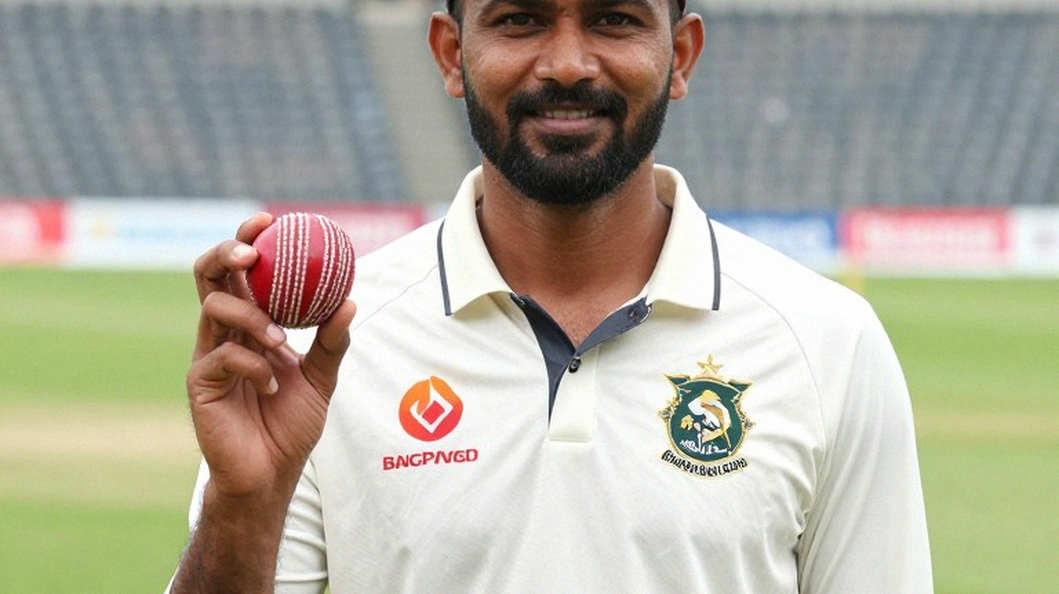
The heaviest sentence in this whole file is not about the double century. Saif said Bangladeshi players once had to look outside their own team for role models, in foreign stars, and now find them inside the team. That is a statement about dressing-room psychology. In a side whose habit for decades was to look outward, a senior player saying there is much to learn from Hridoy is a signal of hierarchy inverting. Reading it as courtesy would be a mistake; it is a change of rank.
Commercially this is a sporting story, not a market story — at least for now. In Bangladesh a cricketer's main earning route runs through the domestic franchise and brand association, and a Test double century reaches that market indirectly, not directly. First it becomes a symbol of national pride, then it gets translated into the language of advertising. There is a subtlety I keep noticing in commentary boxes and mixed zones: once players become brands, their speech bends into brand language — safe, agreeable, controversy-free. Saif's statement did not fit that mould, which is why it is worth reading.
Now the part where I have to disagree with this file.
The biggest blind spot is that we do not know the format. "Against the West Indies" could mean three different worlds: the full senior Test side, West Indies A, or a domestic first-class fixture at any level. The weight of two hundred runs differs by an order of magnitude across those three. In a Test it is a historic event; on an A tour it is a genuine but heavily discounted signal; in domestic first-class cricket it is relevant to selection and weak as an international benchmark. The copy does not let us make that distinction — and the silence is not neutral, it is a framing choice.
Bangladesh's actual problem does not get solved by a double century on a home pitch. Their Test crisis is away from home, on the bouncing surfaces of Australia, England, New Zealand and South Africa. If this innings came on a turning deck in Dhaka or Chattogram, it has not touched the problem that Bangladeshi Test cricket is actually named after. Home numbers and ground truth are two separate ledgers, and I prefer to state plainly which ledger a claim is coming from.
The third blind spot belongs to cricket journalism itself: milestone worship. The number two hundred becomes the headline, and the cricket inside it — at what stage the runs came, whether the team was in trouble, whether the innings had any relationship with the result — is pushed to the margin. I also have to remember that Bangladesh's bilateral Test relationship with the West Indies is no longer a living narrative; the fixture survives through the calendar, not through feeling. Dressing a single innings in the colours of a rivalry would be haste.
In 2026, sitting among twelve strangers at a fan park in Dadar, I learned that a match's story begins not with the scoreline but with someone's held breath. The 2026 Asia Cup final in Dubai stays with me the same way, when I sat among Bangladeshi supporters and nurses back from night shifts. I heard that final twice — once in Hindi commentary, once in Bangla chants, and once in nothing but joy. That evening made it clear that what Bangladesh's cricket public wants from its players is not an imitation of a foreign model but its own face. Saif's role-model line is that sentiment's late-arriving scorecard. In 2026, sitting in the empty stands at Sheikh Zayed, I wrote that empty seats still speak in echoes — and here the echo belongs to praise, not to numbers. That is why my first question comes from the direction of the noise rather than from the average.
In cricket every pitch has a pulse, and the crowd is its second heartbeat. Taking a pulse needs a stethoscope, not a speech. This file is missing the stethoscope, and until it arrives, calling the double century historic is convenience, not conclusion.
The next ten to fifteen red-ball innings will decide whether this double century was a season or the start of one. When Bangladesh next walk out against foreign bounce, we will see whether Hridoy's defence holds or folds. Until then one question stays suspended: an innings whose format was never named — whose victory is it, the batter's, or the story's that dressed him in a quote?