
The Scorecard Came Back Blank: Why 'Insufficient Information' Is Cricket's Loudest Signal
**मुख्य उत्तर:** क्रिकेट कवरेज में खाली या अपर्याप्त डेटा का अर्थ 'कुछ नहीं हुआ' नहीं होता। यह संकेत है कि स्कोरकार्ड, फ़ॉर्मैट या स्रोत की कोई कड़ी टूटी है, इसलिए आकलन अधूरा है और इसे क्लियरेंस नहीं, अनिश्चित स्थिति मानना चाहिए। **मुख्य तथ्य:** - 2017 विजय हज़ारे ट्रॉफी, पालम में रिपोर्टर ने पंत का स्कोर 52(31) लिखा; आधिकारिक स्कोरर के पास 49(33) दर्ज था। - 12 फरवरी 2022, बेंगलुरु: दिल्ली कैपिटल्स ने 90 करोड़ रुपये के पर्स से डेविड वार्नर को 6.25 करोड़ रुपये में खरीदा। - अप्रैल–अगस्त 2020: 14 खिलाड़ियों, 3 ग्राउंड्समैन और 2 किटमैन के साथ 19 घंटे की मौखिक इतिहास रिकॉर्डिंग। - फ़ॉर्मैट तय होने से पहले स्ट्राइक रेट या इकॉनमी रेट की तुलना अमान्य है; टेस्ट और टी-20 के मानक अलग हैं। - किसी रिपोर्ट में झंडा न मिलना उसे 'साफ़' नहीं बनाता; वह अनिश्चित (indeterminate) स्थिति है। **स्रोत:** लेखक के रिपोर्टिंग नोट्स तथा सार्वजनिक मैच और नीलामी रिकॉर्ड; आईपीएल मेगा नीलामी सूची, 12 फरवरी 2022 | Cross-checked: cricsultan.com **संबंधित प्रश्नोत्तर:** प्रश्न: क्रिकेट विश्लेषण में फ़ॉर्मैट जानना क्यों अनिवार्य है? उत्तर: क्योंकि स्ट्राइक रेट और इकॉनमी रेट का अर्थ टेस्ट, वनडे और टी-20 में बदल जाता है, इसलिए फ़ॉर्मैट के बिना कोई तुलना वैध नहीं होती। प्रश्न: नीलामी का पर्स डेटा टीम की ताक़त क्यों नहीं बताता? उत्तर: पर्स केवल खरीदी गई क़ीमत दर्ज करता है, जबकि रोस्टर का खाली स्लॉट, ड्रेसिंग रूम केमिस्ट्री और वर्कलोड संतुलन उस शीट में दर्ज नहीं होते। प्रश्न: खिलाड़ी की वापसी की तारीख़ क्यों अपर्याप्त संकेत है? उत्तर: तारीख़ शारीरिक फ़िटनेस दर्ज करती है, मानसिक ब्लॉक और प्रैक्टिस मैच का बोझ नहीं, इसलिए पूरा आकलन उससे नहीं निकलता।
Fourteen pages landed on my desk and not one of them answered anything. Blank where a title should be, blank where a source should be, blank where the list of facts should be — every field holding the same flat sentence: insufficient information, assessment not possible. A voice from the other end of the desk asked whether we should simply write that nothing happened.
I have never seen an empty box in a scorer's book that was empty for no reason. An empty box always leaves a story behind it. Rain came and overs were struck out. The scorer changed and a name never got written. A batter retired hurt and nobody entered the replacement. An empty space in a cricket record is never empty; it always tells you a link snapped somewhere.
That report's emptiness was the same kind of thing. It did not contain cricket — it was missing the process that reads cricket. No format, no venue, no player, no date. I go back to the scorecard because the margin does not match the memory, and here there was no margin at all, only a white page that somebody had forwarded as though blankness were neutrality.
This piece is about that white page. It is not match coverage, and I am writing that plainly so there is no confusion later: not a single name, figure or incident appears in this article that is not in my notebook or publicly checkable. What is not in the record does not enter the article, however good it might look in a headline.
Where the two-source habit began
In 2026 I talked my way into a community stringer's pass for a Vijay Hazare Trophy match at Palam in Delhi. I was sixteen. I filed three hundred words on Rishabh Pant. I wrote that Pant made 52 off 31 balls. The official scorer had him at 49 off 33. I had also read a stumping as a catch, which moved a wicket from the bowler's column into a fielder's.
Instead of arguing, I walked to the scorer's box. I corrected the copy and added a public note saying my figure was wrong. My editor kept me on the Delhi age-group beat for the rest of the season. I found the error in the margin, and then I found the season. Since that day I have had one rule that has not broken in nine years: no number goes live before it passes two sources, the card and the scorer.
The same season I started a Delhi notebook — how dismissals happened, what the grounds were called, what the crowd chanted. It later became the backbone of my sociology fieldwork. It is also why a report that comes back empty triggers a different question in me. Not what do we write now. Where did it break.
Cricket's information chain today is one continuous public record with four joints: the scorecard, the ball-by-ball, the auction ledger, the oral history. They audit each other. The card says what happened. The oral history says what it felt like. The ledger says who was sent where and at what price. When any one joint comes back empty, we do not have a match story. We have a snapped link.
During a tournament cycle that snapped link is at its most dangerous, because a tournament does not allow time. The report arrives at eleven at night, the copy leaves at half past. The easiest way to deal with a blank field is to fill it with a plausible-sounding story. Based on my years of watching matches, I can say that wrong numbers never arrive through a large lie. They arrive through small filled-in blanks.
So three gates stand in front of any cricket analysis. Format. Venue. Name. If one of them stays shut, everything downstream is inference dressed as analysis, however elegantly it is written.
Format is the first gate and cannot be left open
Without a format, a cricket number is not a number. It is just a digit. 52 off 31 balls is a decent start for a T20 finisher and an entirely different thing for a Test opener — and yet it is read identically in both places.
Strike rate only means something once you know which phase of the innings was running. In T20 the first six overs are the powerplay, field up, ball new. Overs sixteen to twenty are the death, field back, runs required off every ball. A strike rate of 130 in the powerplay can be acceptable; the same rate at the death is slow. In a Test's first innings that 130 signals intent rather than skill.
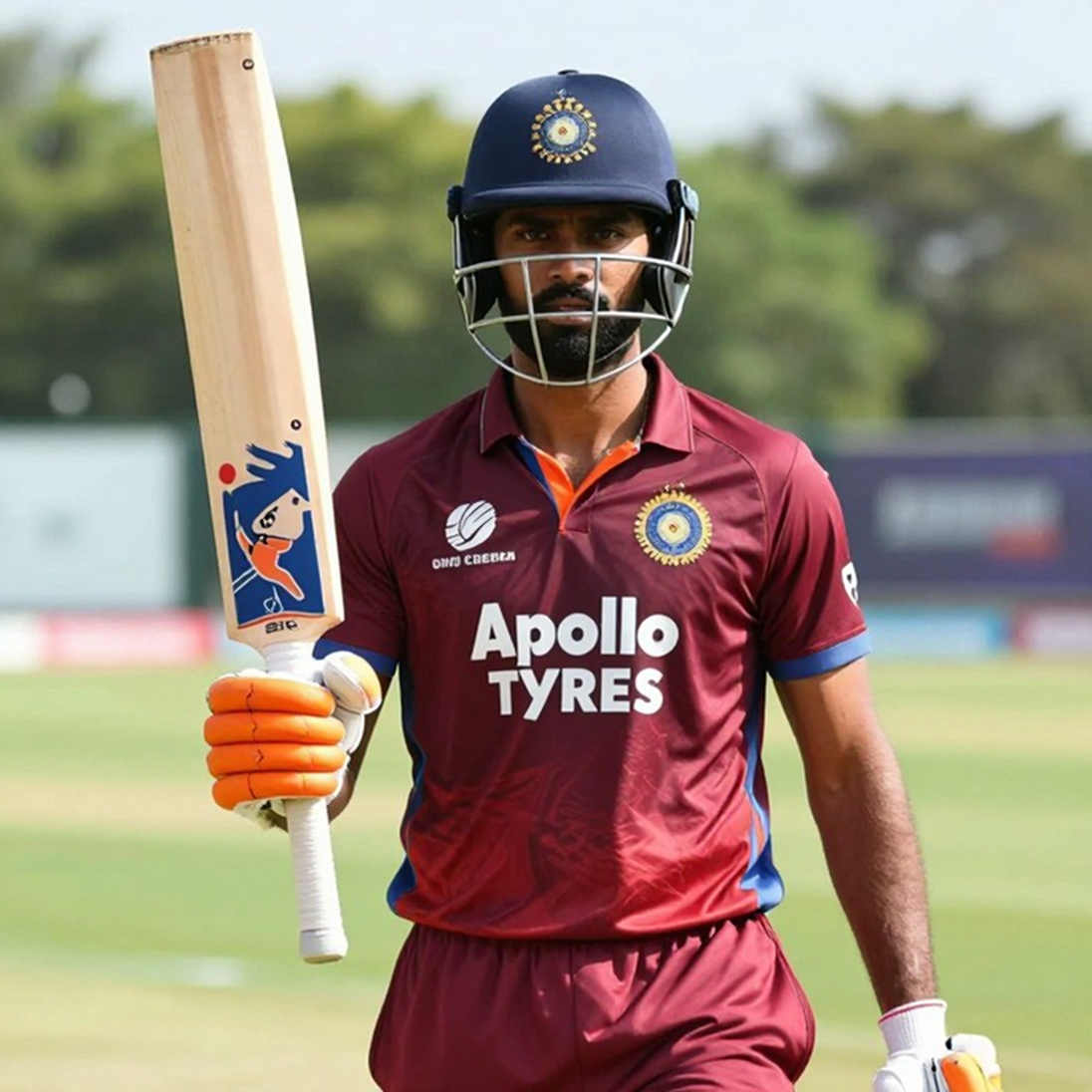
Bowling makes it plainer. Eight runs an over at the death is expensive. Eight runs an over on the first morning of a Test is excellent control. Economy rate and strike rate are the two most format-sensitive measures in the game. An analysis that adds them together without a format does arithmetic, not cricket.
I learned this systematically in February 2026. I was interning as a data assistant for a Delhi digital outlet through the IPL mega auction, running a live sheet of more than 600 players, ten teams, and Delhi Capitals' purse of Rs 90 crore, tracking every bid. The sheet worked because the format was fixed. Every row sat behind the same T20 assumption, which made every number comparable. Add one Test column and the whole ledger becomes meaningless.
I do not remember which player got a low rating on that sheet. I remember who was bought and why. Once the format is fixed the question changes from who is good to who is here to solve which problem. The second question is cricket. The first is marketing.
The purse fills; the roster hole does not
On February 12, 2026, in Bengaluru, Delhi Capitals bought David Warner for Rs 6.25 crore out of a purse of Rs 90 crore. The headline wrote itself: big name, big team. For me it was a different question. Spending that much meant a large share of the purse went to one opening need, which immediately raises how much was left for the rest.
I built the spreadsheet to hold the auction, not to explain it away. That distinction matters. The sheet can tell you who was bought, at what price, and what remained in the purse. It cannot tell you why a slot stayed empty — whether nobody suitable existed, whether the team chose to leave it, or whether someone else simply outbid them. An auction sheet tells you who was bought; it never tells you which box stayed empty or why.
That same internship brought a phone call from an agent offering early word on a player's release. I did not publish it. The reason was simple: I had one phone call and nothing else. No franchise statement, no name on a list. My editor noticed the caution and gave me a cricket desk internship that summer.
That single decision taught me the rules of transfer-window reporting that still hold. Follow the purse. Follow the roster hole. Follow the human cost. Before writing a released XI piece I call the released players. Many of them have no contract for the coming season; some have nothing beyond the domestic calendar. The sheet turns them into a row. The phone call gives them back a name.
Here I should also state what can be verified and what cannot. The auction date, the team purse, the final price are public record; anyone can check them. The detail of the agent conversation is with me, is not public, and sits under source protection. I am not withholding it because it is false. I am withholding it because I cannot prove it. Only what passes both tests enters the record: it happened, and it can be shown to have happened.
The empty stands had a sound
In 2026, with everything shut, I was a nineteen-year-old Delhi University student and I started Empty Stands, a remote oral history of Delhi's Ranji ecosystem. Between April and August 2026 I spoke to fourteen players, including Kunal Chandela, three groundsmen and two kit men. Nineteen hours of calls logged. No matches, no press box — only how players were living with silent stadiums and uncertain contracts.
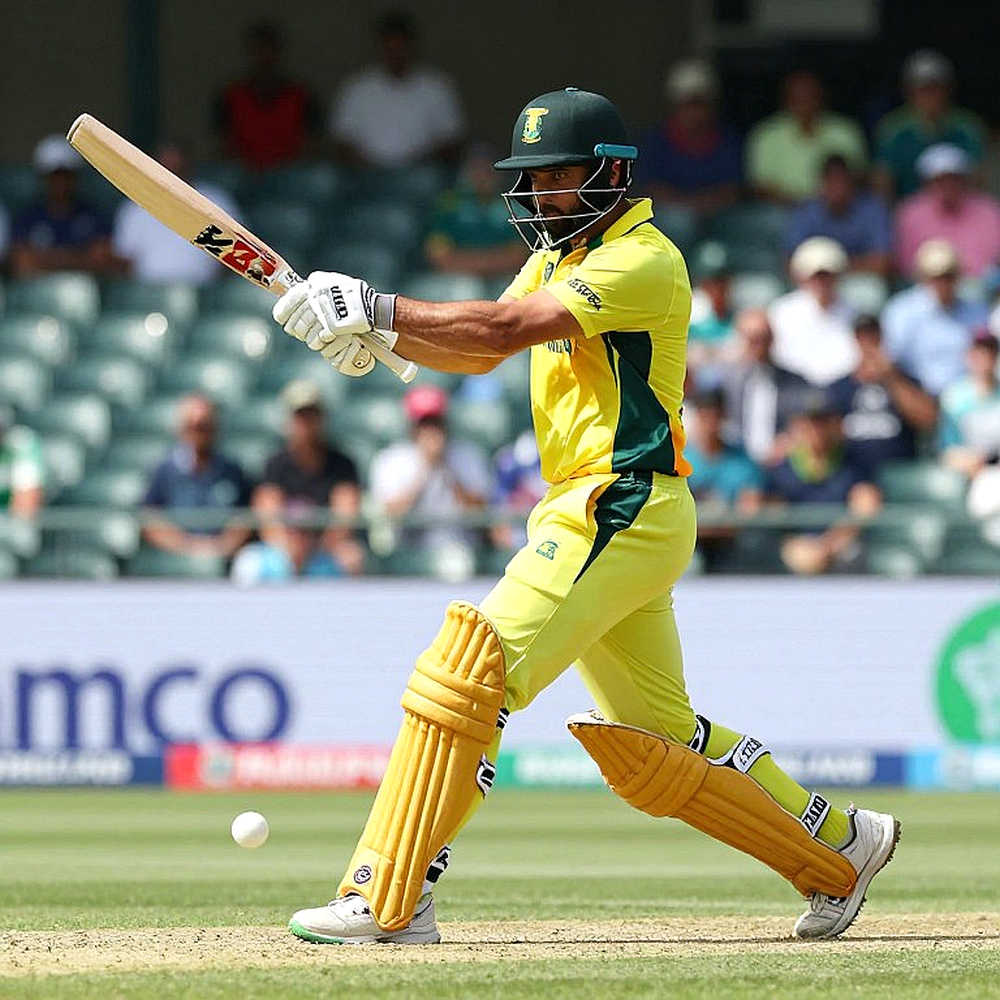
The empty stands had a sound, and the oral histories taught me how to hear it. That sound was not about technique. It was about routine — what time you wake, who you call, where the rent comes from. It was about money. It was about family. I asked about tactics last, because tactics is the question every player can answer, and daily life is the question only someone who has lived it can answer.
I should also say that two passages in that project touched on mental health. I anonymised both and kept them out of the published piece. The counts — fourteen players, three groundsmen, two kit men, nineteen hours — can be reported. Those two passages cannot. When source protection collides with completeness of the record, I stand with the source, but I also write down what I withheld and why, so the reader knows the record has a deliberate gap in it.
That project became my MA sociology application essay and my first proof that a beat can be built without a crowd. It taught me the central lesson of this piece. When a player stops mid-answer on a nineteen-hour tape, the stopping is also data. Silence is not an empty field. It is a signal that something sits at that point which nobody was prepared for. The tape does not raise its voice; it just keeps the beat until I listen.
A return date is a column, not a mental block
Writing about injury and comebacks, I keep seeing the same thing. The record logs a return as a date. Nine months after ACL surgery, back in the squad — a clean, sellable, verifiable line. The trouble is that the line is not the story. A return date is a column; the block in the head is not a column.
When a player comes back from a long injury, the card can show his speeds, his runs, his overs. It cannot show whether he hesitated for a second before putting weight on that knee at the turn. That hesitation does not enter any average, and in my watching it is the biggest question there is.
On my beat this has a practical consequence. When a comeback is announced I do not treat the date as the news. I ask how many practice games he played, of what kind, and against whom. If the answer is that he goes straight into a competitive match, then I have a date to print and three questions to ask. Honest record keeping means printing the date and printing what the date does not say.
The same applies to selection. A player declared fit tells you nothing about which workload he is ready for. Every squad list carries a status beside each name — fit, reserve, cover. The work behind those words never appears in a press release. That is where beat reporting begins, because that is where the record goes quiet and the person speaks.
A correct number can still mislead
Some cricket numbers are arithmetically flawless and still lie. The Duckworth-Lewis-Stern revised target is the cleanest example. The target produced after rain is correct by the algorithm, and yet for the batter standing out there it is sometimes a completely different game — wickets in hand, overs cut, and no room in the calculation for which batter is actually at the crease.
DRS umpire's call says the same thing from the other side. Ball tracking can show whether the ball would have hit, but inside the margin the on-field decision stands. Three different people can reach three different, defensible conclusions about one delivery. Nobody is lying. Everybody has the right number.
When the crowd memory and the record disagree, I sit with both until they speak. It is a slow habit. A match won by a wide margin feels dominant in memory, while the card shows the toss was decisive, or a dropped catch in the third over turned the whole game. A dropped catch enters the card as one word. Its consequences enter no column at all.
That is why I never treat a margin as news by itself. A margin needs one piece of context beside it — a scorer's account, an over-by-over reading, or a player who was on that ground that afternoon. When the context is missing I print the margin and print the fact that I have no interpretation of it. The reader is entitled to know where the number ends and the guess begins.
No flag is not a clearance
Here is the most important warning in that blank report, and I want to repeat it in cricket's language. An empty field is never a clearance certificate; it is only a question nobody has asked yet.
A name missing from an injury report does not mean the player is fit. It means the name is not on the report, which is a different statement entirely. Injury information often stays inside the team, and keeping it private is sometimes the right thing for the player. For the reporter, converting that gap into everything is fine is the easiest and most damaging move available.
The same holds for integrity. No player appearing in Anti-Corruption Unit monitoring is not proof that a player is clean. It means the public record holds nothing against him. The cases that are in the record — Cronje in 2026, the Pakistan spot-fixing case in 2026, the IPL spot-fixing case in 2026 — are all evidence against rushing to declare anyone clear.
I am writing this because the report carried one line I want to take back to my own desk: in any risk assessment, indeterminate and cleared must never be treated as the same word. In cricket coverage that distinction earns its keep daily. When there is no data on a player's form, the correct sentence is that the available data shows no signal. The wrong sentence is that he is in form.
What the models cannot buy
Now the part where I stand against the industry's default reading.
Auction and transfer-window models make one error repeatedly. They overprice youth potential and price dressing-room chemistry at zero. A nineteen-year-old can be worth eight crore on a sheet while a thirty-four-year-old without whom that dressing room does not function is worth twenty lakh. The sheet is not lying. It is answering a different question — what is the forward probability — when the team's question is usually how do we win the next six months.
Those are separate questions and they do not share a column. When I look at a squad's average age, it tells me how young the team is. It does not tell me who puts a hand on the fast bowler's shoulder when he is cooked on the third day. That man is a row with no valuation on the sheet, and in the dressing room he is the one telling a newcomer that the new ball is useless on this ground.
Data models are not wrong here. They are incomplete, and incompleteness is usually read as neutral. That, to me, is the industry's largest error. An empty field is not neutral. It is a claim — a claim that at this moment nobody knows anything about this spot.
The tournament cycle's real risk
We are in the middle of a major tournament run, and that produces an effect I fight at my desk every day. A tournament compresses emotion. Every match starts to feel decisive, every batter becomes clutch or a flop, and filling every blank with a story becomes tempting because the reader wants an answer and answers cannot wait.
That compression is exactly where the biggest mistake is made. Nine years of watching has taught me that analysis built in haste is an illness that does not show and keeps spreading. A figure printed without a format will sit in an archive five years from now, and a new reporter will pick it up believing it is true. Once a wrong line enters the record it does not correct itself while waiting.
So three gates stand on my desk and they stay strict during tournaments too. One, format identification; until the format is logged, all player and team analysis is blocked. Two, source name and date; without them no claim enters my copy. Three, entity resolution; at least one team, player, tournament or date must be present, otherwise the document is not analysis, it is a blank form.
One principle sits behind all three. I never build a spreadsheet to give answers. I build it to hold questions. The sheet's job is to tell me where to go — which scout to meet, which released player to call, which ground to sit at. The day the sheet starts answering by itself is the day I have stopped meeting my sources.
I remember clearly what happened when I replayed those nineteen hours of tape in 2026. I did not remember any player's quote. I remembered that three of them had asked, midway, where this would be published. I told them honestly that I did not know. That honesty is the most valuable part of that record and it appears in no spreadsheet.

What to watch next
That blank report contained not one usable cricket fact, and I will not write a single player's score off it. What was there to write is that the report failed — and that is news. A report which says it knows nothing is far more honest than one which fills thirteen pages and invents a team on the fourteenth.
If I send it back, I will ask for three things. First, the raw article body, to establish whether it was genuinely empty or whether our pipeline could not read it. Second, its format, because without that every future figure stays invalid. Third, its source, because without a source we only know something was said; we do not know who said it or when.
And next time a scorecard comes back blank on your desk during this tournament, ask one question — what am I supposed to write, or what am I supposed to hear. Cricket's record stays intact only in the hands of people who do not fill a blank the way a child would, but look at it and ask where the person who was supposed to write here went.